Achieve your sustainability goals with expert net zero consulting. ClimateSort helps businesses develop and implement robust decarbonization strategies. Contact us today!
The race to net zero has never been more urgent—or more complex. As governments worldwide implement increasingly stringent climate regulations and stakeholders demand transparent decarbonization commitments, organizations across every industry are scrambling to develop credible net zero strategies that go beyond mere greenwashing.
The global net zero consultants services market reached $3.5 billion in 2022 and is projected to grow at a staggering 29% CAGR to exceed $15 billion by 2028.
This explosive growth reflects the mounting pressure companies face from multiple fronts: new climate-related disclosures like the CSRD will impact 49,000 firms in the EU alone by 2026, while stakeholder expectations for science-based targets and measurable progress continue to intensify.
But here’s the challenge: not all net zero consultants are created equal. In a market flooded with sustainability advisors, management consultancies expanding into climate services, and specialized environmental firms, distinguishing between genuine expertise and opportunistic market entry has become increasingly difficult.
The stakes couldn’t be higher—choosing the wrong consultant can result in superficial strategies that fail regulatory scrutiny, waste millions in misdirected investments, or worse, expose your organization to accusations of climate washing.
Net zero consulting refers to specialized advisory services designed to help organizations achieve a state where they remove as much greenhouse gas from the atmosphere as they emit. This ambitious goal requires a comprehensive understanding of an organization’s carbon footprint, from direct emissions (Scope 1) to indirect emissions from purchased energy (Scope 2) and value chain activities (Scope 3).
Expert net zero consulting guides businesses through the complex process of measuring, reducing, and offsetting their emissions, aligning their operations with global climate targets. It’s not merely about compliance; it’s about strategic transformation towards a sustainable and resilient future.
These consultants provide the expertise, tools, and frameworks necessary to navigate regulatory landscapes, identify emission hotspots, and implement effective decarbonization strategies. Ultimately, net zero consulting empowers companies to contribute meaningfully to climate action while enhancing their brand reputation and operational efficiency.
The imperative for businesses to pursue net zero targets has never been stronger. Beyond environmental stewardship, there are compelling economic and reputational drivers. Consumers, investors, and employees are increasingly demanding greater corporate responsibility regarding climate change.
Companies that proactively embrace net zero strategies often gain a competitive edge, attracting sustainable investment and fostering stronger customer loyalty. Furthermore, regulatory pressures are intensifying globally, with many governments setting ambitious decarbonization targets that will impact businesses across all sectors.
Failing to adapt can lead to increased operational costs, supply chain disruptions, and a loss of market share.
By engaging in net zero consulting, businesses can mitigate these risks, unlock new opportunities for innovation, and build long-term resilience. It’s a strategic move that safeguards future profitability and ensures alignment with evolving societal expectations.
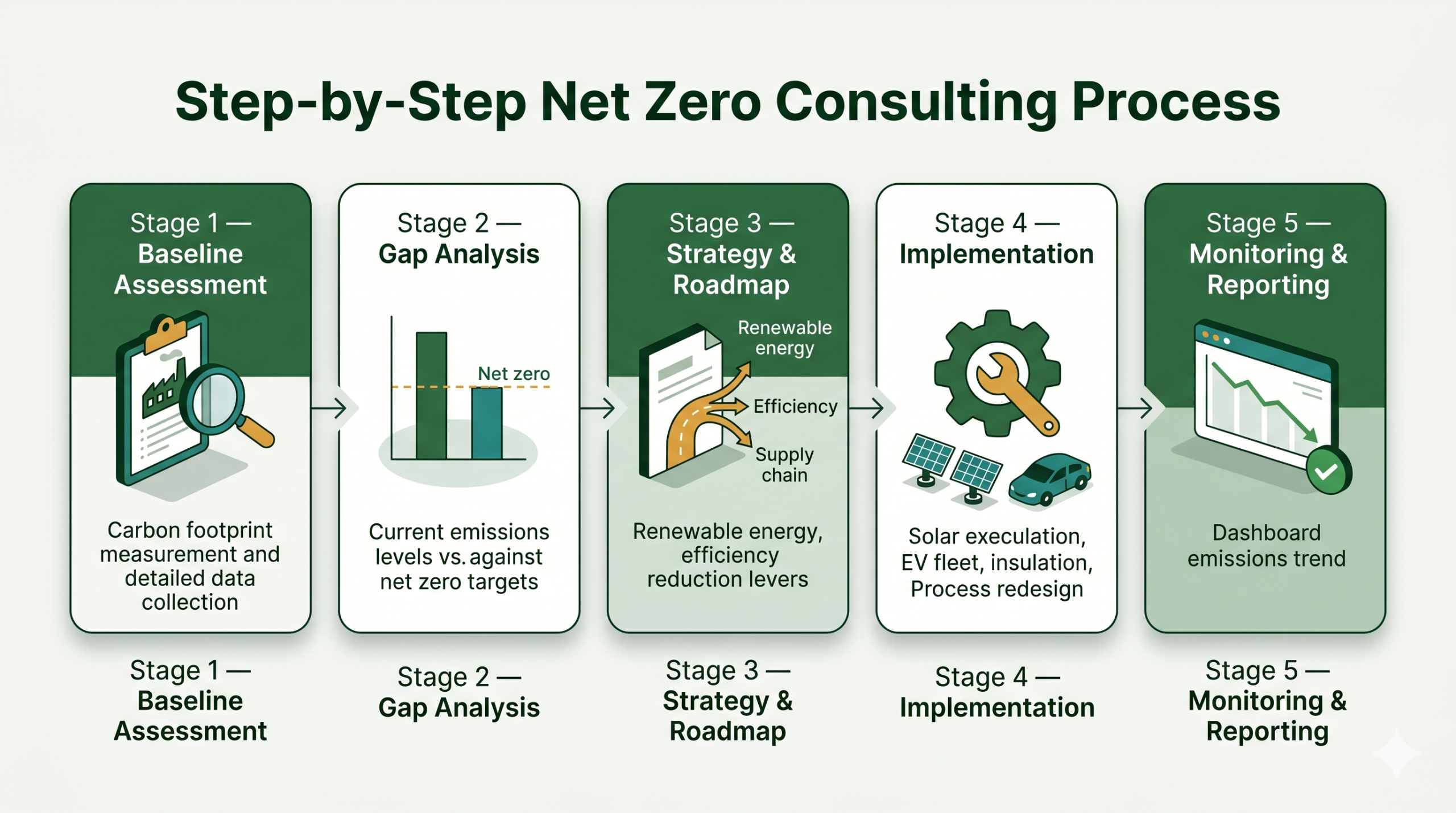
Engaging in net zero consulting typically follows a structured, multi-phase approach designed to systematically guide an organization towards its decarbonization goals. Initially, consultants conduct a thorough assessment of your current emissions, covering Scope 1, 2, and 3, to establish a baseline and identify key emission sources.
This often involves detailed data collection and analysis. Following the assessment, a bespoke net zero strategy is developed, outlining specific targets, timelines, and actionable reduction pathways tailored to your business operations and industry. This strategy may include recommendations for renewable energy adoption, supply chain optimization, and energy efficiency improvements.
Implementation support is then provided, assisting with project management, technology integration, and stakeholder engagement. Finally, ongoing monitoring, reporting, and verification ensure progress is tracked, targets are met, and strategies are continuously refined to adapt to new challenges and opportunities. This iterative process ensures sustained progress towards net zero.
Collaborating with expert net zero consultants offers numerous advantages for businesses committed to sustainability. Firstly, consultants bring specialized knowledge and experience, allowing organizations to navigate complex climate science, regulatory frameworks, and emerging technologies with confidence.
This expertise accelerates the decarbonization process, avoiding costly mistakes and ensuring compliance. Secondly, they provide an objective, third-party perspective, identifying inefficiencies and opportunities that internal teams might overlook. This often leads to more innovative and effective solutions.
Thirdly, engaging consultants frees up internal resources, allowing your team to focus on core business operations while experts manage the intricacies of net zero strategy and implementation.
Finally, a partnership with reputable net zero consulting firms enhances credibility and demonstrates a serious commitment to environmental responsibility, which can significantly boost stakeholder trust and brand value. These benefits collectively drive both environmental impact and business success.
Selecting the ideal net zero consultant is a critical decision that can significantly impact your organization’s sustainability journey. When evaluating potential partners, consider their track record and experience within your specific industry.
A consultant with a deep understanding of your sector’s unique challenges and opportunities will be better equipped to develop relevant and effective strategies. Look for firms that demonstrate a strong grasp of both technical aspects, such as carbon accounting and renewable energy solutions, and strategic elements like stakeholder engagement and change management.
Transparency in their methodology and reporting is also paramount, ensuring you have a clear understanding of their processes and the progress being made.
Finally, assess their cultural fit with your organization; a collaborative and communicative partnership is essential for long-term success in achieving your net zero ambitions. A thorough vetting process will ensure a fruitful collaboration.
Net zero consulting encompasses a broad spectrum of services, each designed to address specific aspects of an organization’s decarbonization journey. These services often include comprehensive carbon footprint assessments, where consultants meticulously measure and analyze Scope 1, 2, and 3 emissions to provide a clear picture of environmental impact.
Strategy development is another core offering, involving the creation of tailored net zero roadmaps, target setting (e.g., Science-Based Targets), and identification of reduction opportunities. Consultants also provide expertise in renewable energy procurement and energy efficiency solutions, helping businesses transition to cleaner power sources and optimize energy consumption.
Furthermore, supply chain decarbonization, climate risk assessment, and sustainability reporting are crucial services that ensure holistic progress. Many also offer guidance on carbon offsetting and insetting strategies, ensuring any unavoidable emissions are responsibly managed. These specialized services are critical for a successful transition.
The foundation of any net zero strategy begins with accurate measurement. Leading consultants establish robust greenhouse gas (GHG) inventories that capture Scope 1 (direct emissions), Scope 2 (purchased energy), and the notoriously challenging Scope 3 (value chain) emissions.
They implement carbon management systems that provide real-time da ta visibility, enabling organizations to track progress against targets and identify emission hotspots across operations, supply chains, and product lifecycles.

Top-tier consultants don’t just help companies set aspirational goals—they develop science-based targets aligned with the 1.5°C pathway recommended by the Intergovernmental Panel on Climate Change.
This involves complex modeling to determine sector-specific emission reduction trajectories, establishing interim milestones, and creating comprehensive roadmaps that balance ambition with achievability. The best consultants integrate these targets with broader business strategy, ensuring decarbonization efforts support rather than hinder commercial objectives.
Perhaps the most critical service is developing detailed implementation roadmaps. Consultants conduct technology assessments to identify optimal decarbonization levers, from energy efficiency improvements and renewable energy procurement to process optimization and circular economy initiatives. They prioritize interventions based on cost-effectiveness, technical feasibility, and emission impact, creating sequenced action plans that guide investment decisions over multiple years.
Given that Scope 3 emissions often represent 70-90% of an organization’s total carbon footprint, leading consultants specialize in supply chain decarbonization. This includes supplier engagement programs, carbon criteria integration into procurement processes, collaborative emission reduction initiatives, and development of low-carbon sourcing strategies. They help organizations navigate the complex challenge of influencing emissions across vast, multi-tiered supply networks.
Beyond mitigation, sophisticated consultants help organizations build resilience to physical and transition climate risks. They conduct scenario analysis to assess how changing weather patterns, policy shifts, and market transitions might impact operations, revenues, and asset values.
This forward-looking analysis informs strategic planning and helps organizations prepare for an uncertain climate future.
As climate disclosure requirements proliferate globally, consultants provide critical support navigating complex regulatory landscapes. From the EU’s Corporate Sustainability Reporting Directive (CSRD) to the Task Force on Climate-related Financial Disclosures (TCFD), they ensure organizations meet evolving transparency requirements while maintaining data quality and audit readiness.
Modern net zero consulting increasingly involves sophisticated technology platforms. Leading firms either develop proprietary carbon management software or partner with specialized providers to offer integrated solutions combining strategic guidance with digital tools for emission tracking, scenario modeling, and progress monitoring.

At the heart of effective net zero consulting lies a proven methodology that top consultants use to guide organizations through decarbonization. This systematic approach, known as the Net Zero Decarbonology Framework, consists of five critical phases that create a continuous cycle of improvement and accountability.
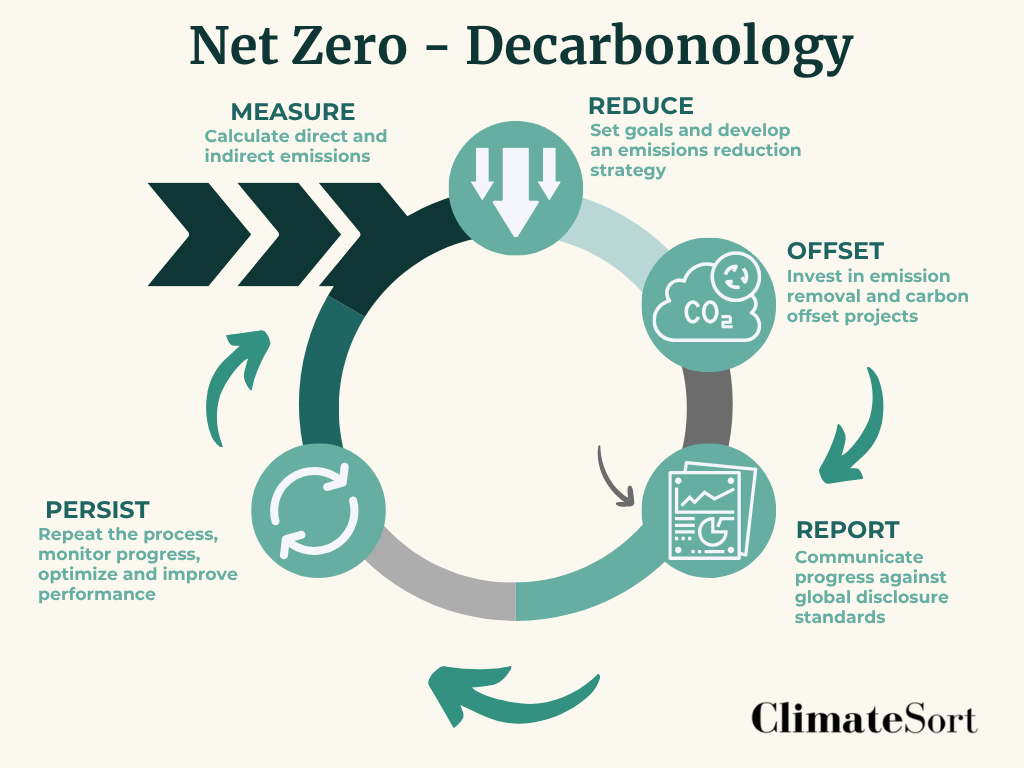
The foundation of any credible net zero strategy begins with comprehensive measurement. Leading consultants implement robust carbon accounting systems that capture emissions across all three scopes:
What It Involves:
Key Deliverables:
Why It Matters: Without accurate measurement, organizations cannot set science-based targets, track progress, or demonstrate credible reductions. Quality data forms the foundation for all subsequent decarbonization efforts.
Once the baseline is established, consultants develop comprehensive reduction strategies that target the highest-impact emission sources while considering cost-effectiveness and operational feasibility.
What It Involves:
Key Deliverables:
Why It Matters: Direct emission reductions represent the most credible and cost-effective path to net zero. Every ton reduced eliminates future offset requirements and demonstrates genuine commitment to climate action.
After maximizing direct reductions, high-quality carbon offsets address remaining emissions that cannot be eliminated through operational changes. Leading consultants ensure offset strategies maintain integrity and avoid greenwashing.
What It Involves:
Key Deliverables:
Why It Matters: While offsets cannot replace direct reductions, high-quality offsetting provides a bridge to net zero while supporting global decarbonization and nature restoration efforts.
Transparent reporting builds stakeholder trust, meets regulatory requirements, and maintains accountability for climate commitments. Top consultants ensure reporting meets the highest standards of accuracy and clarity.
What It Involves:
Key Deliverables:
Why It Matters: Transparent reporting demonstrates accountability, builds stakeholder confidence, and provides the data needed for continuous improvement and strategic decision-making.
Net zero is not a destination but an ongoing commitment requiring continuous improvement, adaptation, and innovation. Leading consultants help organizations build the capabilities and culture needed for sustained success.
What It Involves:
Key Deliverables:
Why It Matters: Organizations that treat net zero as a one-time project often see progress stall. Those that embed decarbonization into their core operations achieve sustained reductions and competitive advantages.
Watch this video from Grist to understand the difference between Net Zero as just a marketing claim and Net Zero as a strategic plan for the future.
From established powerhouses expanding their climate practices to specialized boutiques with deep decarbonization expertise, these 12 consultants have earned recognition as among the most trusted advisors guiding organizations through the complex journey to net zero emissions.