Independent directory · Paid placement never changes rankings. Advertising disclosureData reviewed Oct 2026
Home / Guides / Carbon Capture & Storage (CCU)

12 Best Carbon Accounting Software for SME & Enterprises in 2026 [Review]

By Tamir IsraelyPublished Mar 20, 2024Reviewed by ClimateSort researchUpdated Methodology →
KEY TAKEAWAYS

Are you looking for the best Carbon Accounting software for your business? Here are the 12 best Carbon Accounting Platforms for SMEs & Enterprises in 2025.

Choosing the best carbon accounting solution for your business can be a daunting task, especially with the variety of options available in the market. It can be difficult to select the one that is a perfect fit for your needs.

In this article, we’ll review the 12 best carbon accounting software platforms for SMEs and enterprises in 2026. Whether you’re looking to reduce your carbon footprint, comply with regulations, or simply track your emissions more effectively, we’ve got you covered.

So, let’s get started.

What is Carbon Accounting?

Before exploring carbon accounting software solutions, it’s essential to understand the fundamental concept of carbon accounting.

At its core, carbon accounting is the systematic process of measuring, calculating, and documenting greenhouse gas (GHG) emissions produced by an organization, product, or activity. While carbon dioxide is the primary focus, it also encompasses other greenhouse gases like methane and nitrous oxide, typically converted into carbon dioxide equivalent (CO2e) for standardized reporting.

Carbon accounting follows internationally recognized protocols such as the GHG Protocol, which categorizes emissions into three scopes:

  • Scope 1 (direct emissions from owned sources)
  • Scope 2 (indirect emissions from purchased electricity)
  • Scope 3 (indirect emissions throughout the value chain).

This framework helps organizations comprehensively assess their environmental impact across operations and supply chains. Beyond mere compliance, carbon accounting serves as a strategic tool for businesses to:

  • Identify emission hotspots and opportunities for reduction
  • Set science-based targets aligned with global climate goals
  • Track progress against sustainability commitments
  • Make informed decisions about energy efficiency investments
  • Enhance transparency with stakeholders and investors
  • Prepare for emerging carbon regulations and pricing mechanisms

As climate change concerns intensify and stakeholder pressure mounts, carbon accounting has evolved from a voluntary initiative to a crucial business practice. Organizations increasingly recognize that effective carbon management not only supports environmental stewardship but also drives operational efficiency, reduces costs, and strengthens competitive advantage.

Now that you understand the strategic importance of carbon accounting, let’s explore the digital platforms that enable this crucial practice.

Watch this video by Fifth Wall to learn more about Carbon Accounting:

What is the Carbon Accounting Software?

A carbon accounting software platform transforms the complex challenge of emissions management into an actionable intelligence system for organizations.

Unlike traditional spreadsheet-based approaches, these platforms serve as automated command centers that integrate real-time data from across your operations – from energy meters and fleet telematics to procurement systems and supplier databases.

What sets modern carbon accounting platforms apart is their ability to translate raw environmental data into strategic insights. They employ advanced features like machine learning to detect anomalies in emissions patterns, predictive analytics to forecast future carbon trajectories, and scenario modeling to evaluate different reduction strategies.

Many platforms now offer blockchain-verified emissions data and AI-powered recommendations for emission reduction opportunities.

Carbon Accounting Software Features

Carbon Accounting Software tools offer a range of features that aid businesses in efficiently handling their carbon emissions. Some of the common features found in these platforms include:

1.   Data Collection: Tools for collecting data on energy consumption, transportation, waste generation, and other sources of greenhouse gas emissions.
2.   Emissions Calculation: Calculators and algorithms to estimate greenhouse gas emissions based on the collected data and emission factors.
3.   Reporting: Templates and tools for generating standardized emissions reports for internal and external stakeholders, as well as for regulatory compliance.
4.   Analytics: Dashboards and data visualization tools to help users analyze their emissions data, identify trends, and track progress toward emissions reduction goals.
5.   Scenario Analysis: Tools for modeling different scenarios to assess the potential impact of emissions reduction strategies and make informed decisions.
6.   Inventory Management: Features for managing emissions data, including data storage, retrieval, and version control.
7.   Compliance: Tools to help businesses comply with carbon reporting regulations and standards, such as the Greenhouse Gas Protocol or the Carbon Disclosure Project.
8.   Integration: Capability to integrate with other systems, such as accounting software or sustainability management platforms, to streamline data sharing and reporting processes.
9.   Auditing: Features to facilitate internal and external audits of emissions data and reporting processes.
10.   User Management: Tools for managing user access and permissions, as well as for assigning responsibilities and tracking progress.

The most sophisticated platforms can even quantify the financial implications of carbon pricing scenarios and help organizations optimize their decarbonization investments through built-in marginal abatement cost curve (MACC) analysis.

The selection of a carbon accounting platform should be done carefully, considering the specific requirements and priorities of businesses, as the features can differ depending on the platform.

Now, let’s discuss the top 12 best Carbon Accounting Platforms you can consider using.

12 Best Carbon Accounting Software Platforms

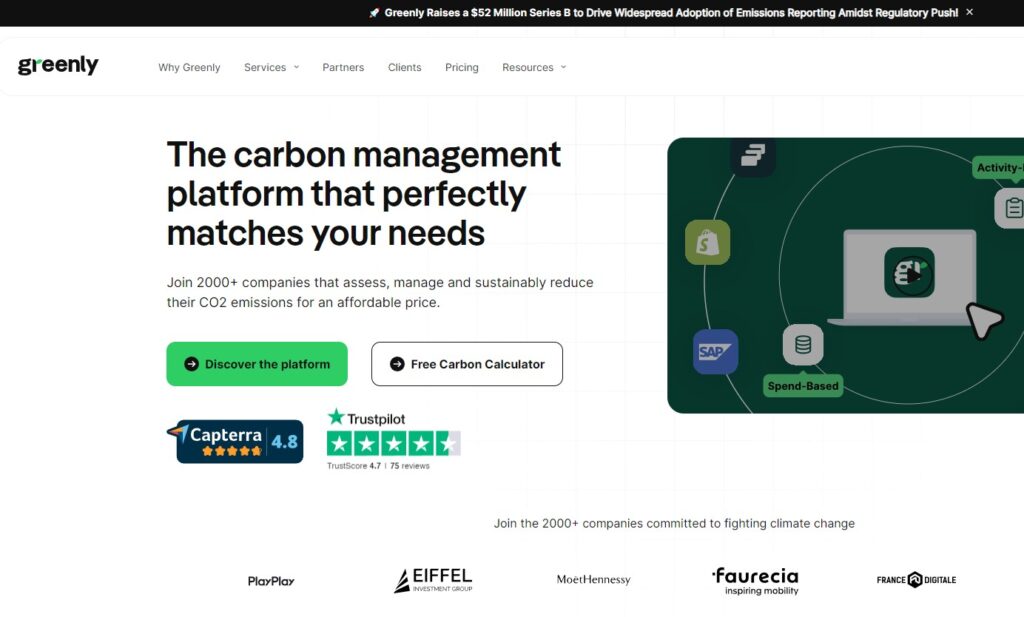
Greenly logo

Greenly

HQ Location
New York, NY, USA
Founded
2019
Num. of Employees
51-200
Greenly Homepage

Greenly offers a comprehensive carbon accounting platform that enables small and medium-sized enterprises (SMEs) to track and manage their carbon footprint effectively.

With an easy-to-use interface and integration with popular business tools like Xero, QuickBooks, and Salesforce, Greenly simplifies the process of carbon accounting for businesses looking to make sustainable choices.

Integrations: Xero, QuickBooks, Salesforce

  • Carbon footprint tracking
  • Sustainable insights
  • Integration with business tools
  • Customizable reports
  • Support for regulatory compliance

IBM Environmental Intelligence logo

IBM Envizi ESG Suite

HQ Location
New York, NY, USA
Founded
1911
Num. of Employees
10,001+
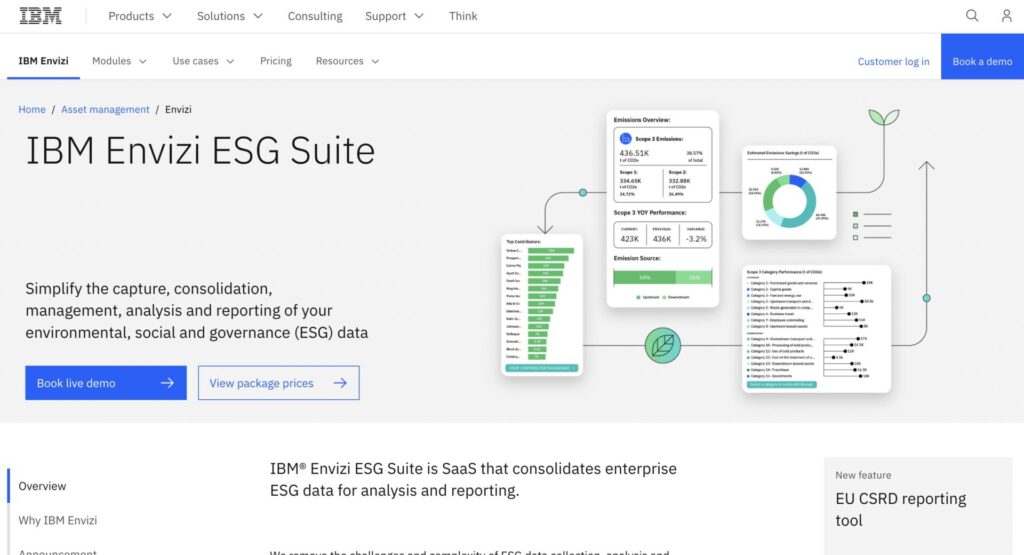
IBM envizi

IBM Envizi ESG Suite is a comprehensive platform designed to help enterprises manage their environmental impact. It provides tools for carbon accounting, environmental data management, and sustainability reporting.

The suite integrates with various data sources, allowing organizations to collect and analyze environmental data from across their operations.

With its advanced analytics and reporting features, IBM Envizi ESG Suite helps organizations improve their environmental performance and achieve their sustainability goals.

Integrations: Integrates with various IBM and third-party data sources and platforms.

  • Carbon accounting and tracking

  • Environmental data management

  • Sustainability reporting

  • Integration with IBM and third-party data sources.

  • Advanced analytics for environmental insights


Microsoft Logo

Microsoft Sustainability Cloud

HQ Location
Redmond, Washington, USA
Founded
1975
Num. of Employees
10,001+
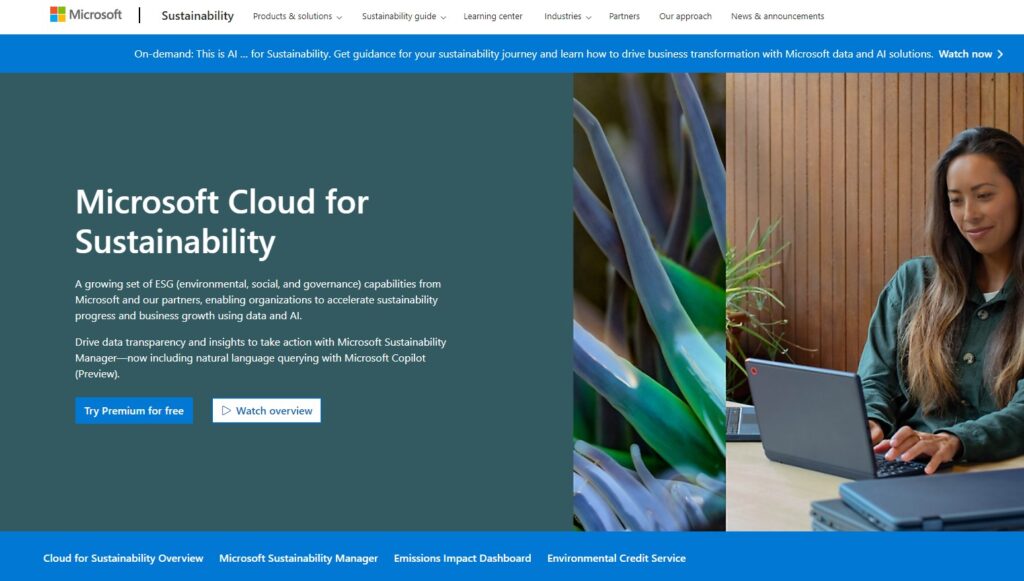
Microsoft Sustainability Homepage

Microsoft Sustainability Cloud is a robust platform that helps organizations track, analyze, and report on their sustainability initiatives. With integration capabilities with Microsoft’s suite of services, it offers a seamless experience for data management and reporting.

The platform enables businesses to set and track sustainability goals, manage their carbon footprint, and comply with regulatory requirements.

Integrations: Microsoft 365, Power BI, Azure, and other Microsoft services for seamless data management.

  • Sustainability goal setting and tracking.

  • Carbon footprint measurement and management.

  • Data visualization and reporting.

  • Integration with Microsoft services.

  • Regulatory compliance support.

Normative

HQ Location
Stockholm, Sweden
Founded
2014
Num. of Employees
51-200
Normative Homepage

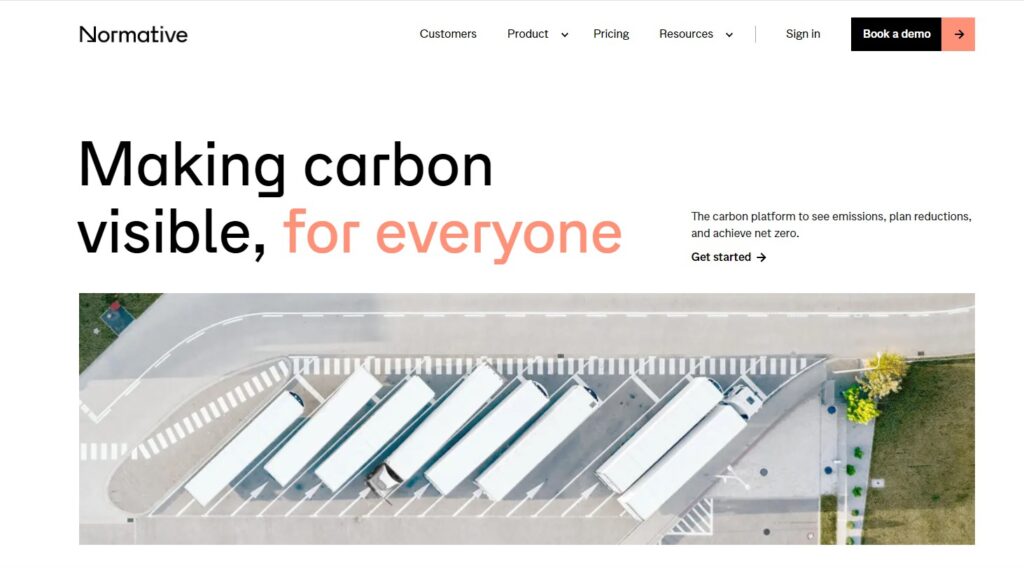
Normative is a carbon accounting platform revolutionizing how businesses collect, report, and understand carbon emissions. Its carbon accounting engine provides clear and actionable insights and assists companies in defining a sustainable growth trajectory.

Normative empowers businesses to plan emissions reductions and lead the charge into the net-zero frontier.

Integrations: Scope 3 supply chain emissions and all data management tools

  •  Comprehensive carbon calculation.

  • Expert support.

  • Audit and compliance-ready.

  • Risk Management.

  • Stakeholder, Supplier, and Sustainability Management.

  • Water Management.


Persefoni Logo

Persefoni

HQ Location
Arizona, USA
Founded
2020
Num. of Employees
201-500
Persefoni Homepage

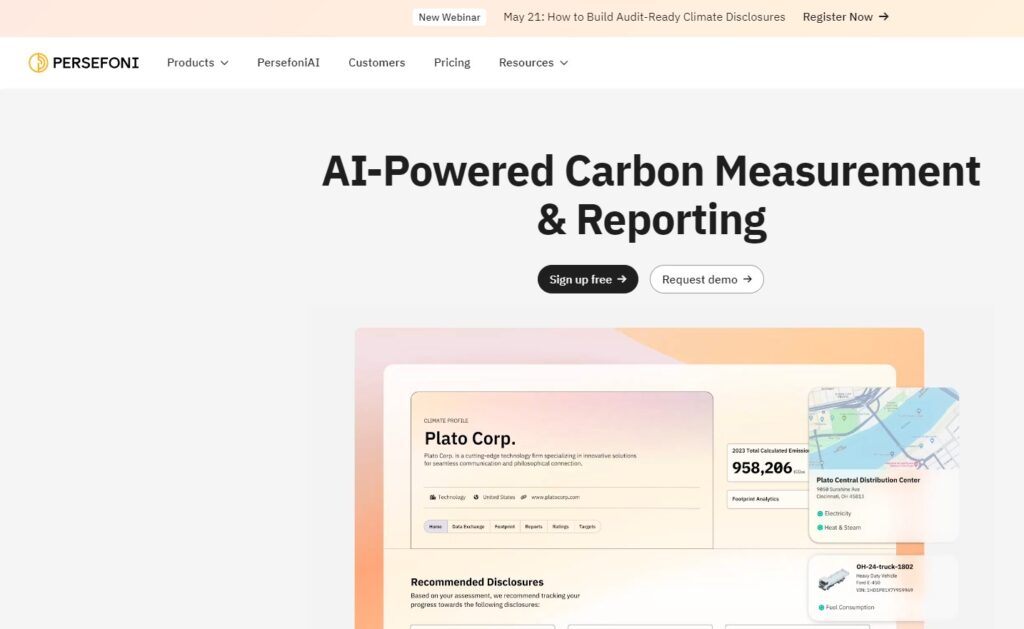
Persefoni is a leading carbon accounting platform empowering businesses to track, manage, and reduce their carbon emissions effectively. With a user-friendly interface and powerful features, Persefoni helps organizations of all sizes achieve their sustainability goals.

The system smoothly incorporates diverse data sources, allowing for immediate access to information on carbon footprints and emission patterns.

Integrations:  Integrations with popular data sources and platforms such as ERP systems, IoT devices, energy management systems, and more.

  • Comprehensive carbon accounting

  • Real-time emissions tracking

  • Data integration with various sources

  • Customizable reporting and analytics

  • Regulatory compliance support


Planet A Logo

Plan A

HQ Location