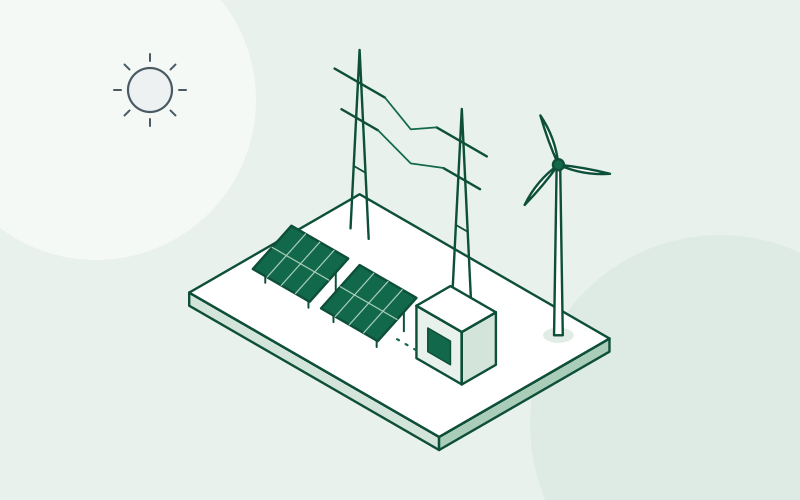
The Top energy storage companies developing sustainable energy storage solutions while solving the intermittent energy generation issue >
Contemporary energy storage companies are harnessing new technologies to improve and establish energy storage facilities to meet an ever-growing demand for clean energy. These efforts are making a remarkable impact on the future of energy generation and storage.
The problem is that current clean energy storage technology is not advanced enough nor cheap enough to be used at scale. Yet grid-scale energy storage is vital to meeting the target of Net Zero Emissions by 2050.
A study performed by Navigant Research indicates that the global market for utility-scale energy storage will reach $15.6 billion by 2026. In 2016 the market hovered at $675 million annually. This is a remarkable increase for a relatively new technology like energy storage.
Thankfully, there are some great innovative companies working on better energy storage solutions. In this article we cover the top energy storage companies, and the technology they use.
Let’s dive right in!
Developing new energy storage solutions for green energy is a daunting task that is oftentimes met with problems mostly related to supply and demand.
In essence, an estimated 56% to 67% of the energy that goes into fossil fuel power plants is lost in the conversion process.
Energy derived from fossil fuels is easily generated and regulated to meet demand. The more energy that is required, the higher the production at those peak times.
The same cannot be said for green energy from solar or wind which are intermittent generation sources. These renewables do not depend on heat, so they do not lose energy yet the efficiency of our technology to harness clean energy is lacking.
During a sunny day or windy period, excess energy from these renewable energy sources must be stored to meet the demand during non-energy generating times. Storing energy is not impossible but it is still very expensive.
It is estimated that solar panels are about 18% to 25% efficient. More efficient solar panels are required to generate more electricity which will save on materials and land area. On the other hand, hydropower is estimated to be about 90% efficient.
The ideal is for renewable energy storage to meet power demands in periods where little or no input from renewable energy sources is available. Currently, the intermittency of clean energy generation affects both the storage rate and storage volume which is a pressing issue.
Solving the intermittent energy generation issue and increasing the supply of renewable energy is key. Check out this video by Vox:
Renewable energy sources typically generate electricity from natural phenomena that include solar, wind, hydro, biological processes, and geothermal heat flows.
Solar and wind are our primary sources of renewable energy. However, our current renewable energy storage capacity indicates that our reliance on fossil fuels will remain for the foreseeable future. This is largely due to insufficient storage capacity and an increasing demand for clean energy.
Experts agree that a multifaceted portfolio of renewables is the most rational approach to creating reliant clean energy generation and storage. Wind and solar energy are created at high levels, at different times of the day. These sources can then be supported by other energy sources to secure a constant flow of energy for storage.
Thanks to innovative technologies, energy storage using large-scale, lithium-ion batteries is approximately 86% efficient.
However, researchers suggest that only by 2050 will the United States be able to provide 94% of electricity from renewable sources.
Simply put, energy storage solutions maximize the utility of renewable energy, making it truly sustainable. Finding the right energy storage solution for different applications has the potential to make renewable energy profitable for enterprises and affordable for consumers.
Investing in energy storage companies’ stock appears to be a lucrative investment. This is largely due to accelerated efforts to decarbonize power markets through battery storage facilities which has resulted in increased demand for renewable energy storage solutions.
Electricity cannot itself be stored on any scale. However, electricity can be converted to other forms of energy which can be stored and later converted to electricity on demand.
The idea behind energy storage is always to have sufficient energy to meet demand. There are three prominent energy storage technologies, namely, pumped hydro storage, mechanical storage, and battery storage.
Thermal energy storage (TES) is another energy storage technology that helps to integrate renewable energy into power generation. TES technologies include molten-salt storage and solid-state and liquid-air variants.
Pumped hydro is a mature and safe technology that is the most widely used type of energy storage.
A typical pumped hydro project will have water pumped to an elevated reservoir using electrical pumps when energy demand is low. This stored water is released through turbines, which generate hydroelectricity to meet increased demand at peak times.
The Bath County Pumped Storage Station in Virginia U.S. has a net generating capacity of 3,003-megawatts.
Mechanical storage takes several different forms. Some projects use flywheels, which store rotational energy that is released for a short duration, typically to bridge a break in energy supply.
Another common type of mechanical storage is the use of compressed air. Electrical compressors are run while electricity is readily available, and the compressed air is driven through turbines to create electricity when needed.
The city of Fresno, California has flywheel storage power plants built by Amber Kinetics to store solar energy. There is a 110 MW compressed air facility in McIntosh, Alabama and a 290 MW compressed air facility in Huntorf, Germany.
Batteries store and release energy electrochemically and require high energy density, high power, long life, and safety, and should be cost-effective. Battery technology has evolved to such a degree that battery electric storage is now incorporated into large-scale energy storage.
Lithium-ion batteries are the most popular batteries for a range of applications. These include residential and larger systems capable of supporting an entire electricity grid.
Emerging technologies, such as flow batteries, function by pumping liquid materials that interact across a membrane and also hold promise.
Flow batteries are less energy-dense than solid-state batteries, but they hold a charge for longer. In addition, flow batteries have a reduced risk of degradation over time.
Battery energy storage is a viable storage method as they are able to store energy long term rather than offer an alternative way to generate energy.
It is important to mention that besides battery storage being expensive, they are bulky, prone to changes in temperature, and require ongoing support to ensure that their charge level is consistently regulated.
The Wheatridge Renewable Energy Facility is the first utility-scale development in Oregon, U.S. to implement wind and solar generation with battery storage. This partnership between NextEra Energy Resources and Portland General Electric has the potential of powering 100,000 homes with clean, reliable energy.
Energy storage systems help to balance the supply and demand of energy, particularly from renewable energy projects. This promotes more efficient, flexible, and dependable energy generation.
The benefits of energy storage include:
Listed below are 7 top energy storage companies that have made great strides in energy storage capability.
These top energy storage companies 2023 are among many global leaders providing energy storage solutions: