Smart grid technology is designed to make energy more affordable, secure, and sustainable. Check out our list of top smart grid companies!
Many energy grids throughout the world still depend on old technology, which results in a high amount of energy loss and is not well equipped to handle multiple energy sources.
Many top smart grid companies are integrating new technologies capable of harnessing renewable energy and seamlessly streamlining energy distribution.
Smart grid technology is designed to make energy more affordable, more secure, and more sustainable.
There are great benefits that come with smart grids, but initial investment is extremely high, and energy storage poses some unique challenges of its own.
We have put together a smart grid companies list from around the world, highlighting their efforts to transform old grids into new and reliable smart grids.
We have included some inspiring startups in our list who are making an impact on how energy can be better monitored and managed for a greener energy future.
Let’s jump right in!
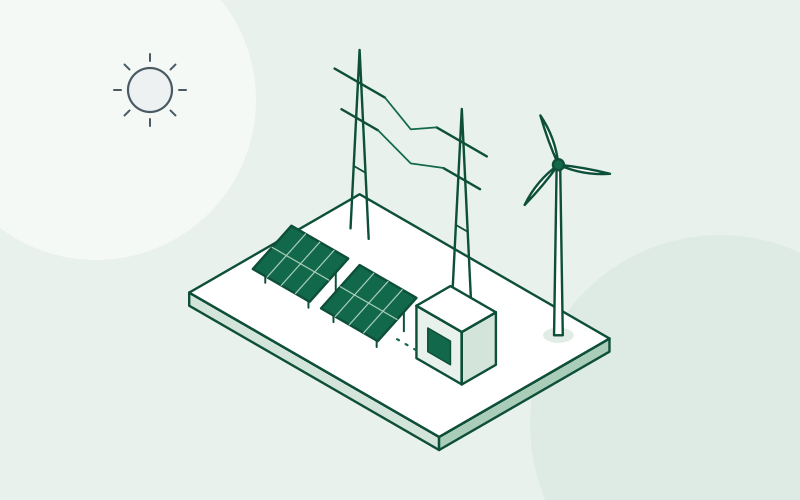
A smart grid is essentially an upgraded conventional electricity grid that integrates digital technology and software to improve the efficacy and performance of existing grids while supporting a low-carbon future.
Broadly speaking, a smart grid is a digitalized, decentralized, and decarbonized electricity network capable of managing generation and consumption while efficiently incorporating new clean energy generators into the grid.
Smart grids function with digital technology to provide two-way communication between the utility provider and consumers, and sensing along the transmission lines is what makes the grid smart.
In contrast to traditional power grids, a smart grid integrates intelligent devices, sensors, and monitoring systems for the continuous collection of real-time data.
This functionality enables more effective management of energy resources. Notably, digital technology enables two-way communication between utilities and consumers, fostering informed decision-making, enhanced energy conservation practices, and the seamless integration of renewable energy sources into the grid infrastructure.
The technology incorporated into a smart grid also isolates problems on the grid to prevent large-scale blackouts.
Consumers can manage their own electricity usage, particularly during peak periods and times when costs are elevated.
Watch this video by Scientific American to see how smart power grids were established in the United States:
Electricity generation and consumption are increasing exponentially to meet the needs of ever-growing global populations and the industries that service them.
Electricity generation worldwide is expected to be more than double the current rate by 2050.
Smart grid networks allow the exchange of real-time information between suppliers and users through the deployment of smart meters.
In 2022, the worldwide smart grid market had an estimated worth of 49.7 billion U.S. dollars. The market is predicted to witness a steady growth rate of around 17.4% per annum and is projected to attain a value of nearly 130 billion U.S. dollars by 2028, as per the forecast.
In order to accomplish the aim of achieving net-zero emissions by 2050, there is a necessity to increase investment in smart grids by over two times by 2030.
The digital infrastructure targets electricity transmission and distribution, with investments in smart meters, automation and management systems, networking and communications, analytics, transformers, and public charging units for electric vehicles.
Smart meters, automation, and management accounted for the largest investment of 13.7 billion U.S. dollars.
Annual global investments in smart meters increased steadily between 2015 and 2021 when they amounted to 21.4 billion U.S. dollars.
Implementing a smart grid is a slow and meticulous process that presents many challenges but is highly rewarding.
The advantages of transitioning to a smart grid are not immediately noticed but once the technology has been implemented and tested, these advantages become more apparent.
Some fundamental challenges impede the transition to a smart grid.