Discover how life cycle assessment consultants are changing the face of business sustainability. Explore how companies are turning waste into wealth and gaining competitive advantages through LCA.
When Katherine Chen started digging into her company’s environmental impact last year, she didn’t expect to find gold in garbage. “We were literally throwing money away,” says the operations director at a mid-sized furniture manufacturer. “Life Cycle Assessment Consultants (LCA) showed us how our waste could become our wealth.”
Life Cycle Assessment (LCA) is transforming how businesses view their environmental footprint. Think of it as CSI for sustainability – a forensic tool that tracks a product’s environmental DNA from birth to burial, or ideally, rebirth. Every raw material extracted, every mile traveled, every watt consumed leaves a trail. LCA follows these breadcrumbs, revealing the true cost of doing business on our planet.
The timing couldn’t be more critical. Our “take-make-dispose” economy is burning through resources faster than ever. But companies wielding LCA are discovering hidden opportunities in the circular economy, where today’s trash becomes tomorrow’s treasure.
Just ask CHEP, the global supply chain giant. Their share-and-reuse model for pallets and containers might seem simple, but the numbers tell a powerful story. In 2023, their South African operation alone saved 28,330 tonnes of CO2 and preserved 118,386 trees. That’s not just environmental accounting – it’s smart business.
“LCA isn’t about checking boxes,” explains Dr. Sarah Martinez, a sustainability consultant who’s helped dozens of companies navigate this transition. “It’s about finding those sweet spots where environmental and economic benefits align. When done right, it’s a competitive advantage you can take to the bank.”
As investors and consumers increasingly demand environmental accountability, companies without solid LCA data risk being left behind. The message is clear: in tomorrow’s economy, what’s good for the planet must be good for business.
Here is a video from Ecoinvent helping us understand more about Life Cycle Assessment.
The concept seems deceptively simple: measure everything that goes into making, using, and disposing of a product. But diving into a full Life Cycle Assessment reveals layers of complexity .
“Think of LCA as an environmental accounting system on steroids,” says Mark Thompson, an environmental engineer at EPA. “We’re tracking water usage, carbon emissions, toxic releases, land use changes – basically anything that impacts our planet.”
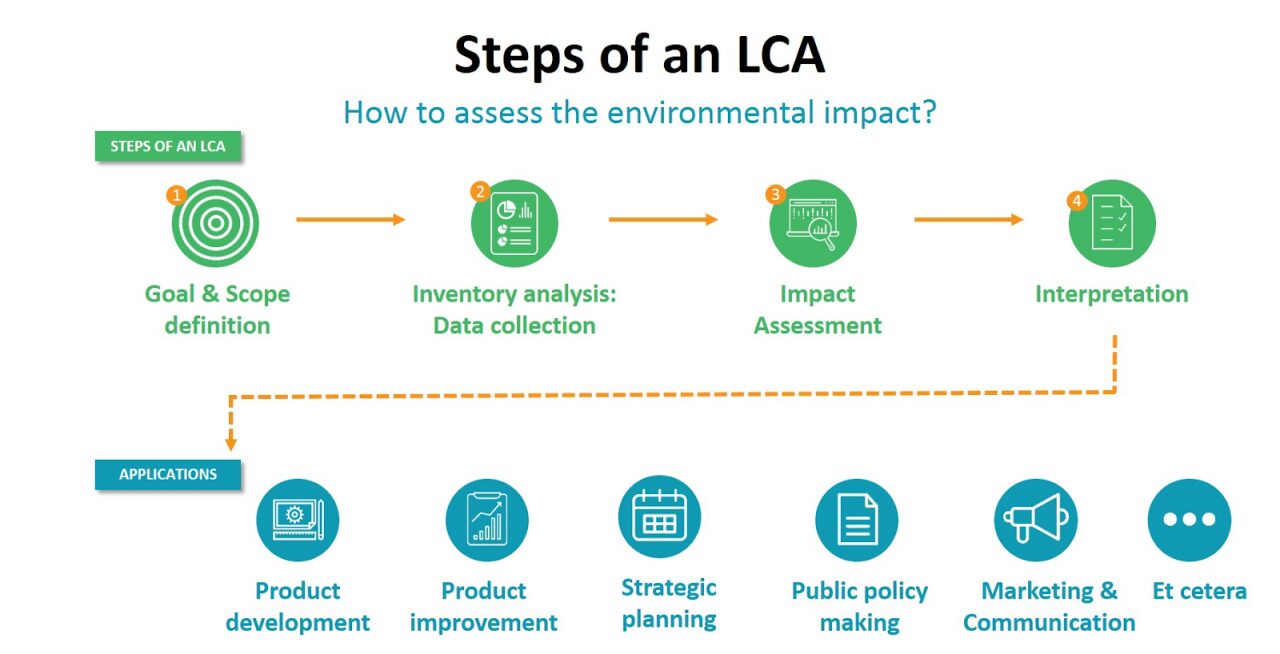
The process typically unfolds in four stages. First comes goal-setting, where companies define what they’re measuring and why. Next is inventory analysis – the grunt work of data collection. Teams track down everything from electricity bills to transportation logs, building a detailed picture of resource flows.
The third stage, impact assessment, is where science meets strategy. Raw data gets transformed into meaningful metrics: carbon footprints, water stress scores, ecosystem damage indicators. “This is where we separate signal from noise,” explains Dr. Martinez. “Not all environmental impacts are created equal. A liter of water used in water-rich Sweden means something very different than one used in drought-prone California.”
Finally comes interpretation, turning mountains of data into actionable insights. Companies identify their biggest environmental pain points and model different solutions. Should they switch suppliers? Redesign packaging? Change manufacturing processes?
For outdoor gear maker Patagonia, LCA revealed that their cotton T-shirts’ biggest environmental impact came not from manufacturing or shipping, but from customers washing them. This insight led to their “Wear More, Wash Less” campaign – proving that sometimes the most effective solutions lie beyond factory walls.
The data demands can be daunting, but new software tools are making LCA more accessible to smaller companies. “Five years ago, this kind of analysis would have been out of reach for most mid-sized businesses,” Thompson notes. “Now it’s becoming table stakes for anyone serious about sustainability.”
Life Cycle Assessment (LCA) has become a crucial tool for companies aiming to reduce their environmental impact. To help businesses navigate this complex field, we’ve compiled a list of 12 top-notch LCA consultants.