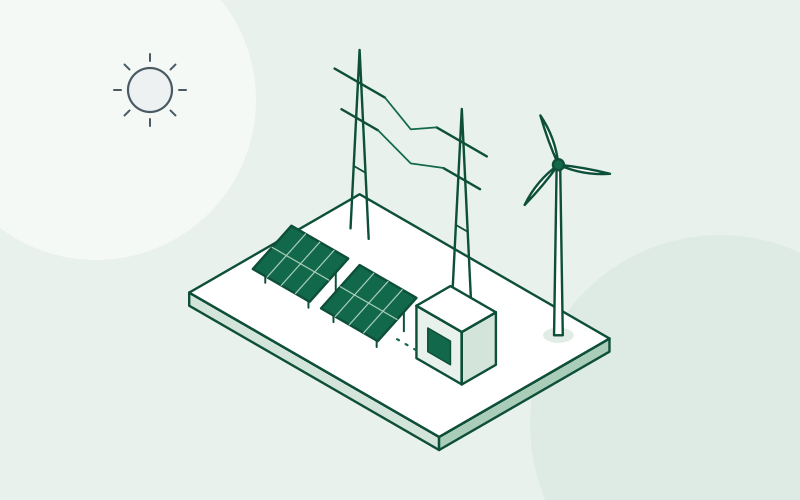
Discover how innovative data cooling companies are revolutionizing data center cooling with sustainable solutions that slash energy use.
Data centers currently consume approximately 1-2% of global electricity, with cooling systems accounting for up to 40% of that energy usage.
The environmental implications are significant – traditional cooling methods not only consume massive amounts of water and electricity but also often rely on refrigerants with high global warming potential. Sustainable cooling technologies are becoming a key differentiator for eco-conscious hosting providers.
A new wave of data cooling companies are challenging this status quo, developing technologies that dramatically reduce energy consumption, minimize water usage, and leverage renewable resources.
From immersion cooling and heat recovery systems to AI-optimized cooling management, these innovations are transforming data centers from environmental liabilities into potential contributors to sustainability goals.
Let’s explore how these pioneering companies are balancing the increasing demands of our digital world with environmental responsibility, and why their solutions may represent one of the most promising pathways toward sustainable computing infrastructure in the coming decade.
We will also take an in-depth look at the top 12 data center cooling companies leading this sustainability effort and analyze how their groundbreaking solutions may represent one of the most promising pathways toward sustainable computing infrastructure in the coming decade.
The explosion of digital services, AI capabilities, and cloud computing has created unprecedented demands on data centers and data center colling companies in the US and worldwide.
While processing power continues to advance at remarkable rates, one fundamental challenge remains constant: heat management.
Modern data centers face a perfect storm of cooling challenges that impact both operational efficiency and environmental sustainability.
High-density server racks can generate temperatures that, if left unchecked, would quickly damage equipment and cause system failures.
Traditional cooling methods, which often rely on energy-intensive air conditioning systems, are becoming increasingly inadequate as power densities rise.
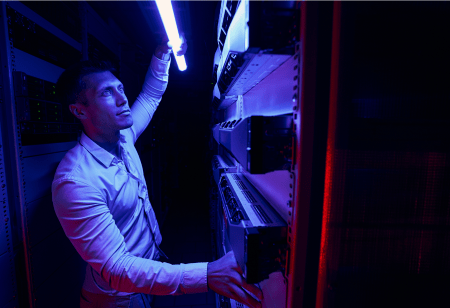
Server racks are becoming increasingly powerful and compact, generating unprecedented heat loads in smaller footprints. Today’s high-performance computing environments and AI workloads can produce heat densities exceeding 30kW per rack—a tenfold increase from standard deployments just a decade ago.
Traditional cooling methods designed for lower-density environments simply cannot keep pace with these concentrated heat sources, forcing data center operators to completely rethink thermal management strategies.
Cooling systems typically account for 40% or more of a data center’s total energy usage. This massive power draw not only impacts operational costs but presents a significant environmental challenge as the digital economy expands.
As computing workloads grow exponentially, particularly with the rise of AI applications, finding energy-efficient cooling solutions has become critical for both sustainability goals and controlling operational expenses.
Many cooling systems rely heavily on water resources, with a typical hyperscale data center potentially consuming millions of gallons annually.
This dependency creates significant sustainability challenges, especially in regions facing water scarcity. Water-based cooling presents complex trade-offs: while it’s often more energy-efficient than air cooling, its environmental impact extends beyond carbon emissions to include water resource depletion.
Data center operators must balance cooling efficiency against water conservation, particularly as climate change intensifies water availability concerns in many regions.
The physical location of data centers significantly impacts cooling strategy and efficiency. Facilities in cooler climates can leverage free air cooling for portions of the year, potentially reducing cooling costs by 50% or more compared to warmer regions.
However, network latency requirements and power infrastructure availability often dictate placement decisions that aren’t optimal for natural cooling.
This creates a constant tension between serving user needs with minimal latency and achieving optimal thermal management through strategic geographic positioning.
Data centers face increasingly stringent regulations regarding energy efficiency and environmental impact. From the EU’s Energy Efficiency Directive to local water usage restrictions, compliance requirements vary widely across regions but share a common trajectory toward demanding greater sustainability.
These regulations can significantly impact cooling system design and operational practices, sometimes requiring substantial investments in infrastructure upgrades.
As climate policy evolves globally, data center operators must navigate a complex and changing regulatory landscape while maintaining reliable service delivery.
Designing cooling systems that can efficiently scale with growing computing demands presents significant engineering challenges. A cooling solution that works effectively for current needs may become insufficient as rack densities increase or facilities expand.
This creates difficult decisions about initial investments, as oversized systems waste resources while undersized systems limit growth potential.
The most forward-thinking data center operators are developing modular cooling architectures that can adapt to changing requirements, though these often come with higher upfront costs and design complexity.
As computing demands continue to grow exponentially with emerging technologies like generative AI, these cooling challenges are becoming increasingly critical.
Industry leaders recognize that addressing these issues requires innovative approaches that go beyond incremental improvements to existing systems.
The quest for sustainable, efficient cooling solutions has become a central focus for data center operators looking to balance performance requirements with environmental responsibility.
As data centers evolve to support increasingly power-hungry applications like AI and high-performance computing, traditional cooling methods are reaching their limitations.
The industry is responding with innovative thermal management approaches that promise greater efficiency, sustainability, and performance.
These cutting-edge cooling technologies not only address the growing heat loads of modern computing but also tackle critical environmental concerns around energy and water usage.
The following techniques represent the forefront of data center cooling innovation, each offering unique advantages for specific deployment scenarios.
Liquid Immersion Cooling
Servers are fully submerged in dielectric fluid that directly absorbs heat from components. This technique eliminates the need for fans and heat sinks while allowing for much higher heat density management—up to 100kW per rack.
Companies like Microsoft have reported 95% less water consumption and up to 30% energy savings with immersion cooling deployments.
The technology particularly shines for high-performance computing and cryptocurrency mining operations, though widespread adoption has been limited by compatibility concerns with certain hardware components and the logistics of maintaining submerged systems.
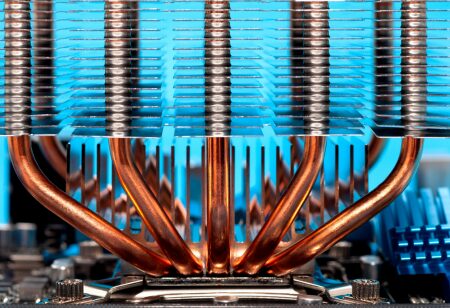
This approach delivers coolant directly to the hottest components—typically CPUs and GPUs—through sealed plates and tubing systems.
By targeting heat at its source, direct-to-chip solutions can handle thermal loads exceeding 50kW per rack while using significantly less energy than air cooling.
Google and Intel have pioneered implementations that recapture waste heat for facility warming, further improving overall efficiency.
The technique balances the benefits of liquid cooling with easier maintenance compared to full immersion systems, making it increasingly popular for AI-focused data centers.
An evolution of standard immersion cooling, two-phase systems use specialized fluids that boil at low temperatures.
As components heat the fluid, it vaporizes, carrying away heat through phase change before condensing back to liquid at cooling coils.
This process is remarkably efficient, with some implementations showing PUE values as low as 1.02. Companies like LiquidStack have demonstrated up to 95%
space reduction for cooling infrastructure while handling extreme density compute.
The technology excels in ultra-high-density environments but requires careful engineering to manage the complex thermodynamics involved.
These water-cooled doors replace standard rack enclosures, capturing heat as air exits server racks. The technology retrofits easily into existing data centers, requiring minimal changes to server hardware or facility design.
Implementations typically neutralize 70-90% of rack heat load while using less energy than traditional CRAC systems.
Major cloud providers have deployed this technology at scale as a transitional solution that bridges conventional air cooling and more advanced liquid cooling approaches.
Advanced evaporative systems use water evaporation to cool incoming air without traditional refrigeration.
Modern implementations incorporate sophisticated controls that optimize water usage based on temperature, humidity, and server load.
These systems can reduce cooling energy consumption by up to 85% compared to conventional air conditioning, though effectiveness varies with climate conditions.
Facebook’s data centers have notably used enhanced evaporative cooling systems that automatically switch between different modes based on external conditions to maximize efficiency.
Beyond hardware solutions, artificial intelligence is revolutionizing cooling system management.
Machine learning algorithms analyze thousands of data points from temperature sensors, weather forecasts, workload patterns, and power consumption to continuously optimize cooling operations.
Google’s DeepMind implementations have demonstrated 40% reductions in cooling energy by predicting thermal conditions and proactively adjusting systems.
These smart systems can coordinate multiple cooling technologies, switching between free air cooling, mechanical cooling, and hybrid approaches as conditions change.
Tapping into the stable temperatures of deep earth or groundwater sources provides natural cooling with minimal environmental impact.
These systems pump water through underground loops where it’s naturally cooled before returning to the data center cooling system.
Microsoft’s Project Natick underwater data center represents a radical extension of this concept, using the ocean as a natural heat sink.
While installation costs are significant, geothermal systems can reduce cooling energy usage by up to 50% with minimal water consumption, making them increasingly attractive for new construction in suitable geological locations.
As computing demands continue to accelerate, particularly with AI workloads generating unprecedented heat densities, these advanced cooling methods will transition from experimental to essential.
The future likely belongs to hybrid approaches that combine multiple cooling technologies, orchestrated by intelligent management systems that optimize for changing conditions and workloads.