Discover the top 12 climate risk consultants of 2026. Our full review covers the best experts to help you mitigate and report climate risks.
As the impact of climate change intensifies, businesses across the globe are recognizing the need to integrate climate considerations into their operations and strategy. This has fueled the need for climate risk consulting.
These specialized firms offer specific solutions to help companies assess their climate vulnerabilities, develop resilience strategies, and align with evolving regulatory requirements.
From developing net-zero strategies to conducting climate stress tests, climate risk consultants can help companies navigate their way to a more sustainable business model.
In this article, we’ll showcase the 12 leading climate risk consulting firms that are at the forefront of this critical industry in 2026.
But first, let’s understand how we define the concept of climate risk, why we need climate risk assessment, and what services these specialists can offer businesses like yours.
The term ‘climate risk’ refers to the potential adverse effects of climate change on governments, companies, economies, people, and ecosystems. This concept covers a spectrum of threats, including sudden disasters and long-term environmental changes.
Taxpayers and consumers frequently shoulder the financial burden of these disasters, and the expenses accumulate rapidly. In 2023, climate disasters resulted in $92.9 billion in damages in the United States, and since 1980, extreme climate events have incurred costs exceeding $2 trillion.
The consequences can be far-reaching, affecting economic stability, social structures, and natural habitats.
Identifying these risks and developing strategies to mitigate them are important steps for communities, companies, and policymakers to take in the face of climate change.
Evaluating climate risk requires consideration of impact probability, potential consequences, and system vulnerabilities. The complexity of this assessment is increased by uncertainties in climate science and significant regional differences.
All of these factors only serve to highlight the need for skilled and knowledgeable risk management approaches.
Climate change is no longer just an environmental concern; it has emerged as a significant economic challenge with far-reaching implications.
The financial toll of climate-related disasters underscores the urgent need for comprehensive risk management strategies across all sectors of society.
To navigate this challenging landscape, a proactive approach to climate risk assessment is essential for all stakeholders. Here are a few of the reasons assessing your climate risk exposure is important to the sustainability of your business:
Climate risk assessments help companies pinpoint areas of their business that are most susceptible to climate-related disruptions. This could include:
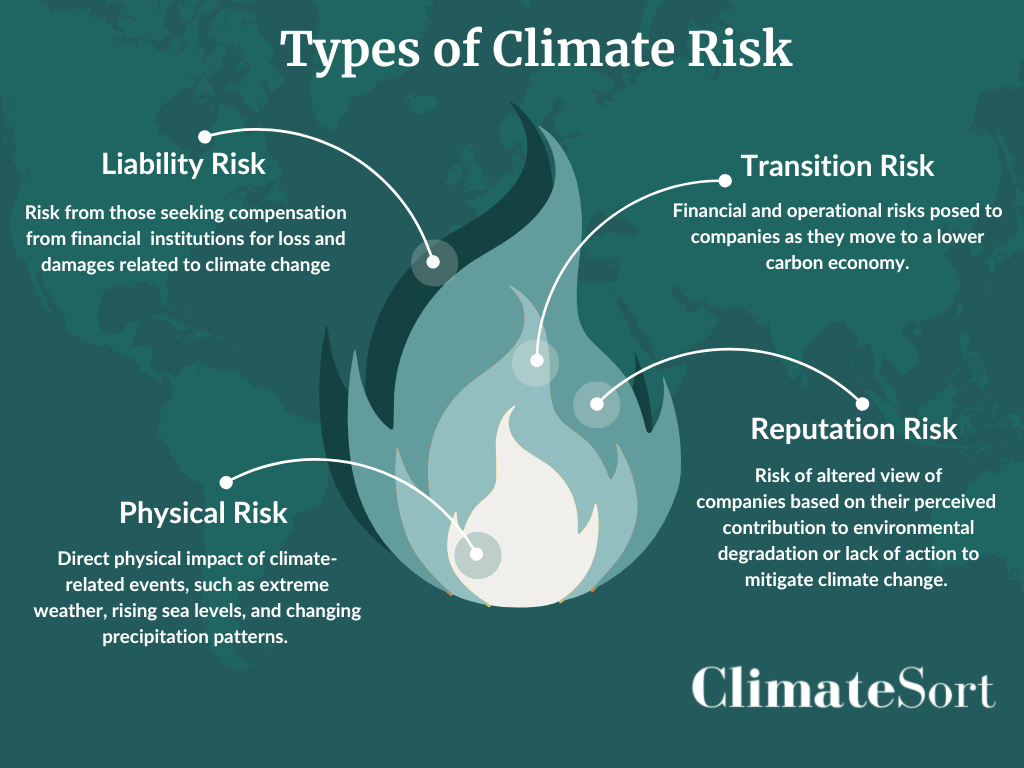
Physical risks: Extreme weather events, rising sea levels, or changes in temperature patterns that could damage infrastructure or disrupt operations.
Transition risks: Transition risks arise as the world shifts towards a low-carbon economy. These risks can stem from changes in policy, technology, and market preferences that affect carbon-intensive industries.
Liability risks: Liability risks are associated with the potential legal consequences stemming from the impacts of climate change. Organizations may face lawsuits for failing to mitigate climate-related risks adequately or for not disclosing material risks to stakeholders. As climate-related litigation increases, companies must be vigilant in their risk management strategies to avoid legal repercussions.
Reputation risks: Reputation risks arise from changing public perceptions regarding a company’s environmental impact. Organizations that are perceived as lagging in their sustainability efforts may face backlash from consumers, investors, and other stakeholders.
This can lead to diminished brand value, loss of customer loyalty, and challenges in attracting investment. Companies are increasingly held accountable for their contributions to climate change, making it crucial for them to communicate their sustainability initiatives effectively.
As governments worldwide implement stricter environmental regulations, climate risk assessments help businesses stay compliant. By understanding the evolving regulatory requirements, companies can develop strategies to meet them, thereby avoiding penalties and enhancing their reputation. This proactive stance not only minimizes legal risks but also demonstrates a commitment to sustainability, which can improve market positioning.
Effective climate risk assessments identify opportunities for optimizing resource use, such as energy and water consumption. By improving efficiency, businesses can reduce their environmental footprint and operational costs. This dual benefit of sustainability and profitability makes climate risk assessment a vital component of strategic business planning.
Engaging in climate risk assessment fosters a culture of innovation within organizations. By addressing climate challenges, businesses are encouraged to develop new solutions and collaborate with stakeholders, leading to innovative products and services. This not only mitigates risks but also opens up new market opportunities, providing a competitive edge.
Another critical aspect is the impact of climate risk assessment on workforce engagement. Employees increasingly seek to work for companies that prioritize sustainability. By implementing effective climate strategies and training programs, organizations can attract and retain talent who are aligned with their sustainability goals, thereby enhancing overall organizational resilience.
Once risks are identified, organizations are able to develop actionable adaptation plans that can be applied to their unique circumstances. These plans may include:
Resilience strategies must be dynamic and adaptable to changing conditions. Implementing monitoring and evaluation systems allows organizations to track the effectiveness of their resilience measures over time.
By collecting data on climate-related hazards and assessing the outcomes of adaptation actions, businesses can refine their strategies, identify lessons learned, and make informed decisions about future investments in resilience.
Incorporating advanced technologies into resilience strategies can significantly enhance an organization’s ability to anticipate and respond to climate risks. Tools such as climate modeling, data analytics, and early warning systems provide valuable insights that enable companies to make proactive decisions.
By utilizing these technologies, organizations can optimize their operations, improve resource management, and ultimately build a more resilient business model.
Climate risk consulting firms provide a wide array of services designed to help organizations understand, assess, and mitigate the impacts of climate change on their operations and strategies. These services are essential for businesses aiming to enhance their resilience in an increasingly uncertain climate landscape. Here’s an overview of the key services offered by these consulting firms:
Consulting firms conduct comprehensive climate risk assessments to identify vulnerabilities within an organization. This involves evaluating both physical risks, such as extreme weather events and rising sea levels, and transition risks related to policy changes and market dynamics. By analyzing these risks, firms help clients understand their exposure and prioritize areas that require immediate attention.
Many firms utilize scenario analysis to model potential climate-related outcomes and their financial implications. This process allows organizations to explore various climate scenarios and assess how different conditions could impact their operations and financial performance. By quantifying risks and opportunities under diverse scenarios, firms provide actionable insights that inform strategic planning and decision-making.
Based on the findings from assessments and scenario analyses, consulting firms assist organizations in developing tailored climate risk strategies. These strategies outline specific actions to mitigate identified risks, set measurable targets, and prepare for regulatory disclosures. This strategic framework helps organizations align their operations with sustainability goals and enhances their overall resilience.
Consultants work with organizations to design and implement adaptation and mitigation plans. These plans may include measures to enhance infrastructure resilience, optimize supply chains, and reduce greenhouse gas emissions. By identifying and measuring the effectiveness of these actions, firms help clients not only minimize their climate risk exposure but also capitalize on opportunities presented by the transition to a low-carbon economy.
With increasing regulatory requirements regarding climate disclosures, consulting firms provide support in preparing mandatory reporting documents that comply with frameworks such as the Task Force on Climate-related Financial Disclosures (TCFD) and the Carbon Disclosure Project (CDP). This includes guidance on best practices for transparency and accountability in climate reporting, ensuring that organizations meet stakeholder expectations and regulatory standards.
Effective climate risk management often involves engaging various stakeholders, including employees, investors, and community members. Consulting firms offer training and workshops to enhance understanding of climate risks and foster a culture of sustainability within organizations. This engagement helps build internal capacity for addressing climate challenges and encourages collaborative approaches to resilience.
Many climate risk consulting firms leverage advanced technologies and data analytics to enhance their services. This includes utilizing climate models, geographic information systems (GIS), and big data analytics to provide deeper insights into climate risks and opportunities. By integrating these technologies, firms can deliver more precise and actionable recommendations tailored to their clients’ specific needs.